Welcome to the Team: Torsten Runge
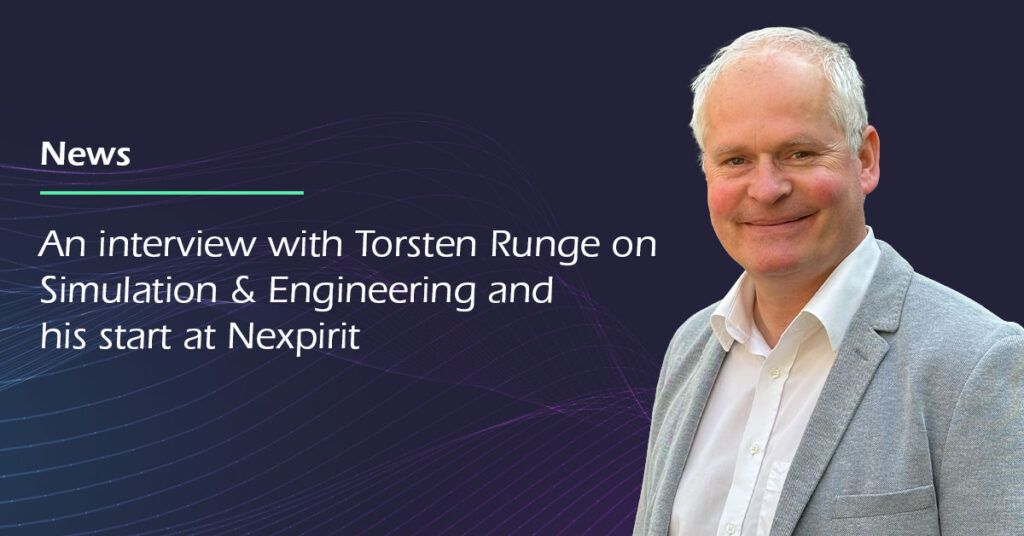
An interview with Torsten Runge on Simulation & Engineering and his start at Nexpirit
After 22 years in the Siemens Software Ecosystem – many of them as a sought-after PreSales expert for Simcenter and Teamcenter Simulation – Torsten Runge brings exactly what Nexpirit customers need: deep process knowledge, hands-on experience, and a passion for simulation that has stayed with him since the very first wrench he picked up.
We asked him what simulation is really about, why SPDM is the underrated core of modern product development – and what a vintage VW T3 Bulli has to do with any of it.
Torsten, introduce yourself briefly: What do you do at Nexpirit?
„Since April 2026, I have been working as PLM Principal Consultant for Nexpirit, bringing my simulation expertise into consulting – specifically around Simcenter 3D and SPDM with Teamcenter Simulation. My goal is to help our customers get their simulation processes really well under control: structured and set up so they are always working with the latest processes and software.“
„How can we build it better?“ - What is behind this question?
What is actually the difference between Simcenter, Simcenter 3D, and Teamcenter Simulation - it sounds confusing to outsiders.
„It’s easy to get confused, which is why it’s important to explain it clearly. Simcenter is the umbrella term for the entire simulation ecosystem from Siemens, covering many different software programs. Simcenter 3D is one of them – the flagship for 3D simulation: it can calculate fluid dynamics, thermal analyses, magnetization, structural mechanics, and much more, while simultaneously optimizing. Teamcenter Simulation, on the other hand, is not simulation software – it is an application within Teamcenter that handles the management of all this simulation data. Think of it this way: Simcenter 3D is the engine – it delivers the computing power and the results. Teamcenter Simulation is the on-board electronics that controls everything, monitors it, connects it together, and can send signals to all other simulation programs.“
And what is SPDM - you use this term regularly.
„SPDM stands for Simulation Process and Data Management – the structured management of simulation processes and data. That sounds dry, but it is the core of everything. Without SPDM, companies work with simulation data in silos: on local hard drives, in shared folders, without versioning and without any link to the product. SPDM means: I always know which simulation is based on which design version, what results are available, and who has worked with them. That is the foundation for making decisions quickly and confidently.“
Who is this relevant for - who are typical customers?
„Really anyone who wants to optimize something – and that is a surprisingly broad group. Whether a single user or a team, everyone benefits enormously! From coffee machines to wind turbines to satellites: simulation is behind all of it. Our customers come from very different industries and company sizes. What they have in common is that they want to improve their products while shortening development time and reducing costs – ideally without building countless expensive physical prototypes.“
After 22 years at Siemens - why Nexpirit now?
„After such a long time at a large corporation, something new appeals to me – a different dynamic, different opportunities to shape things. I very, very much enjoyed working at Siemens. At Nexpirit, I see a real opportunity to advance the topic of simulation in the PLM context and to connect it with themes like materials data management and sustainability. That is an exciting new combination for me. And I have known Lucas since 1998 – so the trust was there from the very beginning.“
What can you concretely offer customers who are starting with simulation or want to improve their processes?
„I understand both sides: the technical and the commercial. I can go deep into the details with an engineer just as well as I can discuss return on investment with a decision-maker. What I bring is experience from many customer conversations: I know the typical weak points and always find a way to good solutions. Simulation is not an end in itself. Ultimately, it is about bringing better products to market faster – with fewer prototypes, fewer errors, and lower costs.“
Welcome to the team, Torsten!
If you would like to learn how to structure and optimize your simulation processes with Teamcenter Simulation and Simcenter 3D, get in touch with Torsten directly.